Design
AI in UX: My New Best Friend (or Worst Enemy?)
June 4, 2026 · 4 min read
I'll be honest—when AI first started creeping into UX design, my first thought was: "Great. Another thing trying to replace me."
And I wasn't alone. Suddenly, AI tools were generating wireframes, analyzing user data, and even suggesting UI improvements—all in seconds. Meanwhile, I sat there tweaking button sizes for the third time, questioning my life choices.
But after plenty of experimenting (and a healthy dose of existential dread), I realized: AI isn't the enemy—it's just a tool. A ridiculously fast, occasionally clueless, but ultimately useful tool.
So, let's dive into the good, the bad, and the slightly terrifying side of AI in UX.
🤖 The Good: AI Does the Boring Stuff For Me Let's be honest—there are parts of UX I love, and parts I'd rather never touch again. AI handles the latter.
✅ Data analysis? Done.
✅ Auto-generating wireframes? No problem.
✅ User behavior predictions? Scarily accurate.
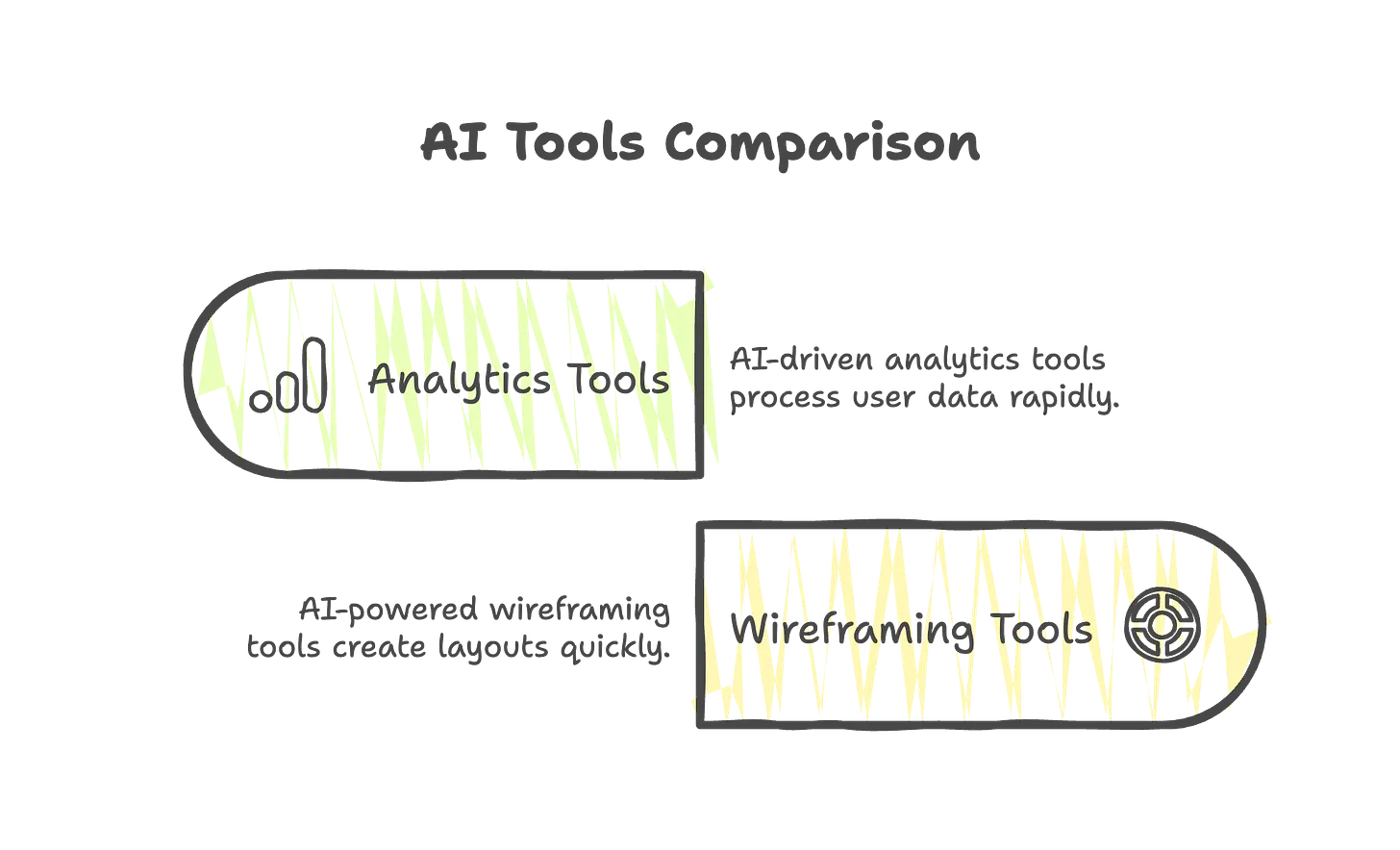
Fact Check: AI-driven analytics tools like Amplitude and Mixpanel can process user data up to 100x faster than manual analysis. Meanwhile, AI-powered wire framing tools like Uizard and Relume can produce functional layouts in under a minute.
I used to spend hours poring over heat maps and user flows. Now? AI delivers insights in seconds, and I get to spend more time actually designing. It's like having an intern who never sleeps or asks for coffee breaks.
But here's the catch...
⚠️ The Bad: AI is Fast, But It's Not Creative AI can optimize, automate, and analyze, but let's be real—it has the creativity of a brick.
It follows patterns, not instincts.
It lacks emotion, nuance, and that "gut feeling" designers rely on.
Everything it creates feels… predictable.
I recently tested an AI-generated UI tool for fun. The result? A perfectly structured, visually balanced, yet completely soulless design. No personality, no spark—just a cold, calculated layout that looked like a corporate brochure from 2008.
Data Speaks: According to a 2023 Adobe study, 75% of designers believe AI can assist in UX but not replace human creativity. AI-generated designs might hit the usability benchmarks, but they often lack the emotional depth that makes a product truly resonate.
AI is a great assistant, but let's not pretend it's the next Dieter Rams.
🛡️ The Slightly Terrifying: Is AI Coming for My Job? I won't sugarcoat it—some designers will get replaced.
Companies focused solely on speed and efficiency? They'll happily let AI churn out generic designs.
Numbers Don't Lie: A McKinsey report estimates that 30% of design-related tasks could be automated by AI in the next 5 years. That's a lot of pixel-pushers potentially out of work.
But here's what I've learned: AI won't replace designers. Designers who know how to use AI will replace those who don't.
The designers who survive and thrive will be the ones who:
🚀 Use AI to work smarter, not lazier.
🎨 Focus on creativity, problem-solving, and storytelling.
📊 Leverage AI insights but make human-driven decisions.
If your job is just pushing pixels, AI might eat your lunch. But if you're the one thinking strategically, questioning assumptions, and designing for emotions, you're safe. Hell, you're invaluable.
🎯 So, Where Do We Go From Here? AI in UX is a tool, not a threat. The best designers will be the ones who:
🛠️ Let AI handle the grunt work (because who really loves sifting through spreadsheets?).
🔄 Use its insights to design smarter and faster.
🤝 Keep the human touch alive—because UX isn't just about efficiency, it's about connection.
And let's be real—AI still sucks at being human. 😏
🔥 What do you think? Are we designing with AI, or designing against it? Let's talk.
Satyamexe
Product designer with an engineering brain, a startup bias, and a habit of turning messy product problems into cleaner user flows, sharper interfaces, and measurable business outcomes.
Get Satyamexe in your inbox
Product design notes, UX breakdowns, AI experiments, and practical lessons from building.
We respect your privacy. No spam, unsubscribe anytime.